Lastest Articles

Showing posts with label Technology News. Show all posts

Sunday, June 8, 2014

Samsung Reveals The Very first Tizen Phone

0 comments


This week while all eyes were glued to Computex 2014, Samsung launched the world's first commercially available Tizen phone, the Samsung Z, during the Tizen Developer Conference in San Francisco. The phone will be released in Russia in Q3 2014, and then to other markets after that for an unspecified amount.

According to the specs, the phone has a 4.8-inch screen with a 1280 x 720 resolution, backed by a quad-core SoC clocked at 2.3 GHz. The phone also has 2 GB of memory, 16 GB of internal storage and a microSD card slot supporting 64 GB of additional storage.

Additional specs reveal a 2.1MP camera on the front, an 8MP camera on the back, a fingerprint sensor, dual-band Wireless N and Bluetooth 4.0 LE connectivity, and NFC. Other features include a heart rate sensor, GPS, a barometer, accelerometer, gyro, a proximity sensor and more.

The phone will be made available in Black and Gold, and feature a faux leather back panel. The form factor has a slim, angular design, giving the device a "differentiated" look. The overall dimensions are 5.45 x 2.74 x 0.33 inches, and the weight is 0.299 pounds.

"The Tizen platform delivers a fast, optimal performance with improved memory management," states the PR. "The Tizen-based Samsung Z offers a faster startup time and immediate multi-tasking capabilities. The Samsung Z fully supports superb 2D and 3D graphic qualities, smoother scrolling and an improved rendering performance for web browsing. Users will also be able to enjoy safe and secure privacy protection using the built-in fingerprint sensor."

more .

Saturday, June 7, 2014

FIFA 15 System Requirements

0 comments


While next-gen console owners were treated to a next-gen version of FIFA last year, us PC gamers were left out in the cold with the same graphics engine EA Sports has been lugging around for years.

Now FIFA 15 has rolled around it's making the leap to the next-gen EA Sports Ignite engine, so to see if your PC is more of a freewheeling Messi than an Adebayor, read on to check out the FIFA 15 PC system requirements...

FIFA 15 Minimum System Requirements

OS: Windows 7 64-bit

CPU: Intel Q6600 Core2 Quad 2.4 GHz OR AMD Phenom 9750 Quad-Core 2.4GHz

RAM: 4GB System Memory

GPU: Nvidia GeForce GTX 650 OR AMD Radeon HD 5770

GPU RAM: 512MB

DX: DirectX 11

HHD: 15GB Free Hard Drive Space

Sound Card: DirectX Compatible

FIFA 15 Recommended System Requirements
OS: Windows 7 64-bit

CPU: Intel i5-2550K 3.4GHz OR AMD FX-6300 3.5GHz

RAM: 8GB System Memory

GPU: Nvidia GeForce GTX 460 OR AMD Radeon HD 6870

GPU RAM: 1024MB

Wowzer. As you can see these are some pretty mammoth requirements for a sports game. The FIFA 15 recommended requirements run a 10, 8 and 9 for CPU, GPU and RAM respectively on the GD hardware scale.

In comparison to FIFA 14 these are a massive step up. Whereas that needed just a GeForce 8400, the new Ignite Engine, EA claim, requires at least a GeForce GTX 650 1GB. Combine that with the need for a pretty juicy quad-core processor and you've got some demanding system requirements for FIFA 15.

As with any sports game though we would expect the PC version to be extremely scalable, so in all likelihood gamers will be able to get away with lower specs if they don't mind sacrificing some of the nicer effects.
more .

Thursday, November 14, 2013

Worldwide Playstation 4 Prices Compared

0 comments

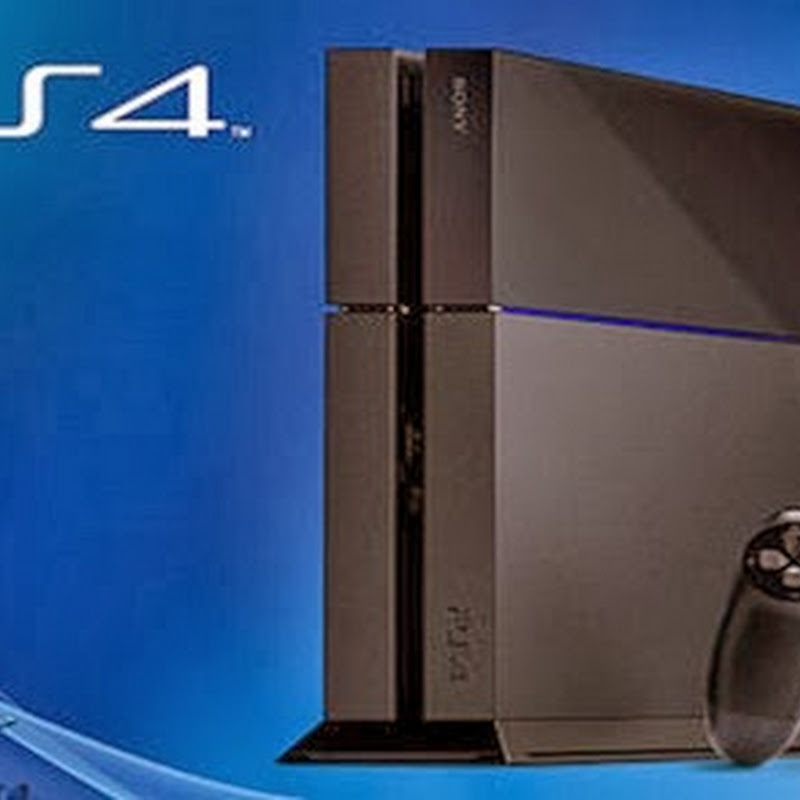
Sony's Playstation 4 will be available in Singapore on 19th December 2013 for S$639. But with the console officially launching tomorrow (15th November) in the US and Australia, does it make more sense to buy one from overseas (don't forget, all PS4 games are region-free)? Let's find out.

CountryPriceCurrent Price in S$Release Date
SingaporeS$639S$63919th December
MalaysiaRM$1799S$70020th December
Hong KongHK$3380S$54417th December
AustraliaAUD$549S$63915th November
USUS$399S$49815th November
UK£349S$69829th November
Europe€399S$67029th November
BrazilR$3999S$213929th November

As you can see, the US is by far the cheapest option if you're planning on importing a PS4, at a converted price of just S$498. However, due to the size and weight of the console, the cost of shipping and importing it into Singapore may well cost you more than S$140. As such, if you can wait until 17th December, your next best bet is Hong Kong, where the console will be on sale for HK$3380 or approximately S$544. Whatever you do, don't buy one from Brazil.

If you're still debating over which next-gen console to buy, you might also want to check out our comparison article between the PS4, Microsoft's Xbox One and Nintendo's Wii U.
more .

Monday, November 11, 2013

Xbox One And PS4 Incapable Of Functioning Properly

0 comments
Xbox One And PS4 Incapable Of Functioning Properly 
If you lack an internet connection and happen to own a next-gen console, you will quite literally be unable use them the way you would expect. 
In the Xbox One’s case, you will be unable to use it altogether, thanks to a DRM-disabling patch that renders your console unusable without a working internet connection for the update...

mpu_xboxoneUI_id1384163572_343178 Accessing Any Xbox One Dashboard Functions Will Required The Day One Update
Microsoft director of product planning Albert Penello stated: "Functionally, you will be able to do very little without taking the day-one update." When the question arose of what you could do without the update, Penello stated "Nothing. You need the day-one update."
The update will "accommodate the differences between hardware and software manufacturing schedules," and will take up to 20 minutes for the average user to download and install; the update will also add entertainment applications.
Penello stated: “You’re going to need to take this update, It’s not going to be really an optional thing."
The patch is essentially required to negate the DRM  storm that blew up during Microsoft's press conference at E3. Presumably the consoles were too far along in the production process to accommodate Microsoft's u-turn on what many perceived to be anti-consumerist policies.
As we confirmed last week, the PlayStation 4 is also in a similar camp with the somewhat absurd day one update's, requiring a 300MB update that includes some necessary features and functions.
It adds Remote Play and second screen functionality through the PS4 Link app; for PS Vita, iOS, and Android. It also includes the much hyped share function, which enables players to share images and videos through PSN, Facebook, and other similar social networks. As well this the broadcast and spectate functions of Ustream and Twitch are found in the update, alongside the PlayGo Feature which enables players to start playing after downloading a certain portion of game data, though Sony stated not all games will support the feature.
The update also contains facial recognition, and voice commands, a background music player, party voice chat, online multiplayer, and the PS4’s Blu-ray/DVD functionality will not work until the patch is applied.
more .

Thursday, November 7, 2013

Playstation 4 First Shots Of The Internal Design

0 comments

Playstation 4

Have the urge to pick up a Playstation 4 and disassemble it like some sort of grotesque silicon-loving Dr Frankenstein? Well have no fear, for a Sony engineer has assuaged your destructive desires with a teardown that gives you a peek inside its upcoming console.
We’ve waited months for a glimpse at the next-gen consoles tightly packed innards, but finally these pictures show exactly how and what Sony has crammed into this sleek powerhouse…
mpu_ps4internal1_id1383819196_343178 Yasuhiro Ootori - Purveyor Of All Things Playstation 4
If the sight of silicon chips bring you up in hot flushes then calm yourself, as Yasuhiro Ootori, the director of the mechanical engineering team responsible for the console, presents the first images of a deconstructed PS4.
Check out the video here on Wired for a sneaky look at all of the components that make up the system, including the much-vaunted 8GB of high-speed GDDR5 RAM that should give this fledgling console a significant boost over its predecessor.

From the pictures below you can see they’ve managed to fit a fair bit into a pretty compact device, the only question remaining is how well it handles the heat that it could be pumping out, particularly in comparison with the internal power supply that Microsoft saw fit to include externally for the Xbox One. Neither company wants to see a return of the dreaded yellow or red light of death, so it’s pretty paramount that this device doesn’t turn into a miniature oven.
Most impressive about the design of the product is how nearly every inch of the device has been used in one way or another, slotted together like a $400 game of Tetris.
Have a look at a few more pictures of it below and be sure to let us know what you think of the internal design of the PS4!


ps4internal2_id1383819196_343178
 ps4internal3_id1383819196_343178
more .

Nvidia GeForce GTX 780 Ti review

0 comments
GTX-780-Ti-610x346

Well, it’s been a busy month for graphics card releases and we’re only seven days into November, but then we always knew Nvidia would be waiting for AMD to release it’s top end cards before issuing their own response, and here it is: the Nvidia GeForce GTX 780 Ti.
And as you would expect, it’s now the fastest graphics card on the planet. But we’re not just talking about taking the single-GPU crown either, the GTX 780 Ti can actually go much faster than the Radeon HD 7990, let alone either the GTX Titan or Radeon R9 290X.
Nvidia have had to bring out their biggest guns for this battle. The original GTX Titan was a bit of shock and awe in order to topple AMD’s Radeon HD 7970 GHz edition from the top of the benchmark tree, the GTX 780 Ti goes even further. Not even Nvidia’s pro graphics card range has used the GPU behemoth inside this card.

Perhaps AMD ought to take this as a bit of a compliment though. Nvidia hasn’t left anything in the tank here, this card represents every bit of power they’ve managed to pull out of the Kepler architecture. Like the GTX 780 and the GTX Titan before it, the GTX 780 Ti is using the GK 110 GPU Nvidia have previously reserved for their professional Tesla graphics card range. It’s a massive, powerful GPU at 533mm2 with over seven billion transistors - the GK 104 used in the original GTX 680 by comparison is relatively svelte at under 300mm2 with half the transistor count.
The Titan used the same chip as the top Tesla K20X card, with 2,688 CUDA cores making it one of the quickest single GPU cards around at the time. That still wasn’t, however, the full-fat GK 110 chip. Both Titan and K20X sport fourteen of the Kepler architecture’s streaming microprocessor (SMX) modules - each with 192 CUDA cores - to make up that 2,688 core count. The full chip though comes out of the fabs with fifteen SMX and some 2,880 cores. Because of the difficulty getting fully functional yields out of the silicon wafers at the top spec the decision was taken to go forward with fourteen. This allowed for chips without the full fifteen functional SMX modules to still make the grade.

But now because of the serious competition from AMD’s Hawaii GPU, Nvidia have had to bring out the big guns. Because the production process is now far more mature than it was a year or so ago I expect the yields on the top chips are much better than they were originally - they’re going to have to be otherwise Nvidia might be taking a bit of a hit bringing the GTX 780 Ti out at this  price.

GTX-780-Ti-fronty-610x346 Send all the cores, ALL THE CORES!

Quick chips
What does all that mean for gaming performance then? It means the GTX 780 Ti is faster than AMD’s finest, that’s what. But not by much, if I’m honest. In the synthetic benchmark of Heaven 4.0 it shows Nvidia’s top card has the definitive edge when it comes to raw performance, but in-game - Bioshock Infinite aside - the difference isn’t nearly so pronounced.
Indeed, with Company of Heroes 2 even the second-tier Hawaii, the Radeon R9 290, is still faster than this giant of a GPU.

When you think about the fact Nvidia’s latest card is over £200 more expensive than the R9 290 suddenly all those CUDA cores don’t look so impressive. And when you’re only getting a few frames per second on average more than the R9 290X, the extra £100-odd over the top Radeon doesn’t look worth the outlay at all.
I was quite prepared to admit that while the GTX 780 Ti was indeed the new fastest GPU in the world it was only by such an insignificant amount as to barely be worth bothering about. A good demonstration of speedy Kepler architecture, but not a card I could recommend anyone buy.
Then I started playing around overclocking it. Boy, does this thing shift when you start playing around with the core and memory clocks. And even at the top settings (some 1,254MHz on the GPU if you’re interested) it was still only knocking around 83ºC and with the fans at 67% it only sounded as blowy as the R9 290X itself.
I’ve never seen any card get so close to hitting 50FPS in Heaven’s system-taxing benchmark at 2560x1600, especially not with the minimum frame rate topping 20FPS either. In my experience of basic GPU overclocking, whether DIY or factory-overclocked, most cards will net you an extra 10% performance boost at best. The GTX 780 Ti was boosting gaming frame rates by 16% at the very least, sometimes as high as 23%.
These are important speed bumps when you’re gaming at high resolutions, which is where you want to be when you’re spending £560 / $700 on a graphics card. If you’re plugging this into a 1080p screen only then you’re a mad person.


GTX-780-Ti-top-610x346 To really see the best of the GTX 780 Ti you need to overclock Must-have?

It’s still not got the must-have price/performance metrics of the impressive Radeon R9 290 though. That card is still an absolute bargain for the gaming speeds you can get out of it. And while the GTX 780 Ti at its top overclock does pull away, sometimes quite significantly, from the second-tier Radeon it’s still tough to argue that the extra performance is really worth the extra couple hundred you’ve got to spend on the GeForce card.
For some people it will be though. If you want the absolute best, quickest graphics card on the market right now, and one that still wont burn a hole in the side of your chassis, or deafen you at full speed, then Nvidia have got the card for you. At £560 / $700 it is a premium-priced GPU, but when you consider the GTX Titan is still selling for much, much more, it’s not actually that bad, value-wise. Fingers crossed Nvidia have sorted out the chip yields for GK 110 chips with the full fifteen SMX modules, because I’m pretty confident they could sell an awful lot of these cards. I guess we’ll see what stock levels are like over the next few days.
Benchmarks
DirectX 11 synthetic performance
Heaven 4.0 - Avg. FPS (min): higher is better
GeForce GTX 780 Ti - 40.6 (18.9)
Radeon R9 290X - 33.7 (17.4)
GeForce GTX Titan - 37.0 (18.2)
Radeon R9 290 - 31.2 (16.7)

DirectX 11 gaming performance
Bioshock Infinite - Avg. FPS (min): higher is better
GeForce GTX 780 Ti - 68 (15)
Radeon R9 290X - 57 (16)
GeForce GTX Titan - 60 (11)
Radeon R9 290 - 55 (16)

Company of Heroes 2 - Avg. FPS (min): higher is better
GeForce GTX 780 Ti - 25 (12)
Radeon R9 290X - 29 (15)
GeForce GTX Titan - 25 (12)
Radeon R9 290 - 27 (14)

GRID 2 - Avg. FPS (min): higher is better
GeForce GTX 780 Ti - 86 (69)
Radeon R9 290X - 86 (68)
GeForce GTX Titan - 77 (61)
Radeon R9 290 - 77 (62)

Total War: Rome II - Avg. FPS (min): higher is better
GeForce GTX 780 Ti - 37 (12)
Radeon R9 290X - 36 (13)
GeForce GTX Titan - 33 (12)
Radeon R9 290 - 34 (11)

Metro: Last Light - Avg. FPS (min): higher is better
GeForce GTX 780 Ti - 28 (14)
Radeon R9 290X - 26 (13)
GeForce GTX Titan - 24 (13)
Radeon R9 290 - 25 (13)

Overclocking performance
Heaven 4.0 - Avg. FPS (min): higher is better
GeForce GTX 780 Ti - 49.2 (21.5)
Radeon R9 290X - 36.7 (18.5)

Temperature performance
GPU 100% - Degrees Centigrade: lower is better
GeForce GTX 780 Ti - 83
Radeon R9 290X - 95
GeForce GTX Titan - 80
Radeon R9 290 - 93

Peak platform power performance
GPU 100% - Watts: lower is better
GeForce GTX 780 Ti - 340
Radeon R9 290X - 383
GeForce GTX Titan - 300
Radeon R9 290 - 347
more .

Wednesday, November 6, 2013

Neowin: Google Nexus 7 (2013) review

0 comments
595

The evolution of  the tablet has been one of the most interesting, and certainly among the most significant, developments in personal computing history. Its genesis arguably lies in science fiction, with tablet-like devices featuring in movies, such as 2001: A Space Odyssey, and TV shows, such as Star Trek, giving a glimpse of what was to come.

The first devices to realise this tablet vision would not come until decades later, with the likes of Apple’s Newton, PDAs such as the Palm Pilot, and Microsoft’s ill-fated Tablet PC platform all attempting to make the concept a reality for a wide audience.

But it was Apple, in 2010, which largely defined the tablet computing experience that we know today. The original iPad set a new standard for others to follow, with a light and slim form factor, a generously sized high-quality display, a rich and diverse software ecosystem, and pricing that finally made the tablet vision affordable.

mpu_zelda_wind_waker_id1383733555_356469

Today, tablets are available in all shapes and sizes, but it is the smallest tablets that are becoming the most popular. Devices such as Amazon’s Kindle Fire range and Apple’s iPad mini are vying for the attentions of buyers who are snapping them up with glee.

Google jumped into this space too in June 2012, with the launch of its Nexus 7, a seven-inch device manufactured by Asus. With prices starting at just $199, it enjoyed broad critical acclaim, and considerable sales success – in July of this year, Google said that it had sold around 7 million units, representing around 10% of all Android tablet
sales.


more .

iPad Air costs Apple between $274 and $361 to produce

0 comments

2013-11-05-image-5

Some new data on how much it costs Apple to produce the iPad Air has surfaced from IHS courtesy of All Things D, and looks as though the company is making top dollar on its most well received tablet to date. Based on the data, Apple is making as much as $568 per unit.

According to IHS, the iPad Air costs Apple between $274 and $361 to manufacture, a number that varies depending on the model. At retail, an Air will run you anywhere from $499 all the way up to $929 for the 128GB model with Wi-Fi and cellular technology, so with some simple math we can see Apple is doing quite well for itself with the new offering.


To break it down, the data points at the device's display as being most costly, factoring for more than half the cost of the lower end model. IHS says that the screen itself runs Apple around $90 and the touch screen elements add on another $43.

Beyond that, the researchers say that Apple has done a good job of cutting costs quite significantly compared to previous options, the base model iPad Air is in total $42 cheaper to produce than the third generation entry model iPad. This time around Apple has managed to cut better deals with its suppliers due to not having made many intensive changes to the design, allowing them to bring the cost down on certain components. The Samsung manufactured A7 chip only costs the company $18, a number that has reduced from the $23 the company was spending on the A5 processor just a year and a half ago.

So in total, IHS estimates that the company's margins on the new iPad Air sit at around 45% for the 16GB base model and 61% on the 128GB LTE version. You can see the call-out slide from IHS's research below:


2013-11-05-image-6

more .

Nintendo President Believes PS4 And Xbox One Launches Will Be Good For Wii U

0 comments
595

Nintendo President Satoru Iwatu believes that  the launch of Sony and Microsoft's next gen consoles later this month will be good for Nintendo as they will “energize the video game industry as a whole”.
Speaking at the Japanese manufacturer's Q2 financial briefing, Iwata said he believed that the new consoles could aid sales of Nintendo's ailing Wii U console...
 mpu_zelda_wind_waker_id1383733555_356469
Last week, we reported that in the UK the Wii U had not been included in published sales figures for game units sold since figures were too low. However, Iwata argued that – although other consoles were launching in time for Christmas - "they focus on targeting highly skilled users” whereas the main titles released on Wii U in time for the holiday season would be more family orientated.
"Thus, in the sense that we attract consumers interested in this category of video games, I think the launch of other video game systems is also good for us because they energize the video game industry as a whole."
He went on to say that – whilst currently the Wii U is targeting a different demographic to the PS4 and Xbox One – Nintendo's upcoming offerings would appeal more to this core “highly skilled gamer”.
It seems more likely that, if anything can solve the Wii U's woes, it will be this. The console alreasdy has several major first party games confirmed to arrive in 2014. So far,Mario Kart 8, Super Smash Bros, Bayonetta 2 and Donkey Kong Country: Tropical Freeze have already been revealed for next year. Zelda Boss Eiji Aonuma has also revealed that 2014's E3 will bring more details about the new Legend of Zelda title, which could be another feather in the cap of Nintendo's Wii U console.
Since the HD remake of The Legend of Zelda: The Wind Waker managed to bump Wii U sales by almost 700% last month, perhaps these games will turn around Nintendo's fortunes.
How do you think Nintendo will fare once next-gen consoles launch? Will the return of classic titles like Super Smash Bros to the console persuade you to buy one, or is the Wii U a lost cause?
Let us know what you think in the comments.
more .

Tuesday, November 5, 2013

Lenovo Yoga Tablet review: first look

0 comments

Under the jubilant “#betterway” hashtag, Lenovo has revealed its latest brainchild, the Yoga Tablet, in synchronised events in Los Angeles and Milan.

Running a lightly customised version of Android 4.2.2 and coming in 8in and 10in variants, the Yoga Tablet resembles nothing so much as an oversized Apple Magic Trackpad. Across most of the screen area it’s an exceptionally slim 3mm deep, but with a cylindrical protrusion of around 8mm bulging out along one edge.

The purpose of this protrusion is threefold. Like Lenovo’s Windows 8-based Yoga systems, the Yoga Tablet is a “multimode” device, and in its first “mode” – that is, handheld usage – the bulge serves as a handgrip. This isn’t a brand new idea: the Sony Tablet S offered a similar bulging chassis back in 2011. But it works. Moving the centre of gravity into the user’s hand makes even the 10in model much easier to use one-handed than its 605g weight would suggest. In portrait mode, the natural way of holding it feels pleasingly like holding a notebook in one hand and writing on it with the other. The 8in model feels almost weightless; a neat trick, since it really weighs 401g, 111g more than a 2013 Nexus 7.


Secondly, the cylindrical design functions as a hinge for the built-in stand. If you wish, you can of course lay the device almost flat on a desk, like a Magic Trackpad; but flip out the integrated stand and the top edge is raised by around 3cm, elevating the whole thing to a comfortable typing position, which Lenovo calls “tilt mode”.


Flip the tablet up with the stand extended and the whole thing stands upright – the third usage “mode”, allowing you to conveniently watch movies and TV shows. As a bonus, the bulge also provides a convenient space to build in a chunky battery: the 8in model gets a 6,000mAh unit, while the 10in one gets a whopping 9,000mAh battery. Lenovo claims these will deliver 18 hours of use on a single charge, though we’ve yet to confirm that for ourselves.

Inside, the Yoga Tablet uses a dual-core MediaTek CPU based on ARM’s Cortex-A7 architecture. Presumably to help battery life along, it’s clocked at a relatively slow 1.2GHz, supported by 1GB of RAM and 16GB of storage (with 32GB models on the way too). 

There’s a microSD slot at the rear too, for easy expansion, and a micro-SIM slot next to it – though no details of 3G/LTE models have yet been announced (we tried the 802.11n-equipped Wi-Fi version). Look closely and you’ll spot a 5MP rear-facing camera and a 1.6MP front-facing lens. The only other connectors are a micro-USB charging port at the left and a headphone socket at the right. 

On the 10in model, text looks chunky, especially compared to Apple’s 10in iPad

One disappointment is that Lenovo has opted for a comparatively low-resolution 1,280 x 800 panel on both models. On first impression it certainly appears bright and vibrant, and on the 8in model it looks no more than slightly grainy. On the 10in model, however, text looks distinctly chunky, especially compared to Apple’s 10in iPad. Homescreen icons appear oversized, as if you’re using a tablet for kids, or for the partially sighted.

It must also be said that in our preliminary tests, performance wasn’t exactly impressive. The SunSpider benchmark took 1,449ms to complete – some 20% slower than the 2013 Nexus 7 – and in the T-Rex GfxBench benchmark the Yoga Tablet managed just 4.4fps – implying around a third of the 3D power of Google’s official tablet. That suggests the Yoga might struggle as a gaming device, if not now then in a year or two.

UK prices hadn’t been confirmed at the time of writing, but Italian consumers will be paying €229 for the 8in Wi-Fi model or €299 for the 10in version. With its magnesium alloy casing, it feels like a solid piece of kit for the money, so its distinctive design and impressive battery life claims could yet persuade customers to forgive its unspectacular performance and mediocre resolution.

To partner the Yoga Tablet, Lenovo is offering a range of colourful cases: a striking green and grey design was shown to partner the 10in model, while the 8in was demonstrated with a more discreet range of orange, black and white cases.


There’s also a dedicated Miracast adapter for wireless display sharing, and a standalone Bluetooth keyboard which doubles up as a 5mm-thick cover, snapping magnetically over the front of the screen for easy storage and transit. As with Apple’s iPad covers, attaching the screen sends the tablet immediately to sleep, and removing it wakes it up again.

It’s an open question whether a keyboard is really a must-have accessory for an Android tablet, and the charging mechanism is hardly elegant – a proprietary three-pin plug that connects under a fiddly flap directly above the keyboard. Still, Lenovo claims the keyboard will last 75 days between charges, so this shouldn’t be a regular frustration. Much will depend on the cost, which hasn’t been announced.

more .

How to recover photos from a corrupted memory card

0 comments

Canon E-P3

If anyone knows a good cardiologist, get in touch. On Sunday, my heart came perilously close to stopping after I put a memory card in my PC and it cheerfully reported that it couldn’t read the contents and perhaps I’d like to format it? The potential heart attack prompted by the fact that the memory card contained more than 250 photos from the wedding reception I’d shot the evening before, and that sickening feeling that you’d just lost a good chunk of the memories from one of the most important nights of the couple’s lives.

Thankfully, after two of the most stressful hours of my life, I managed to recover all but a handful of the photos, and I’m going to tell you how I did it, in the hope that, should you ever find yourself in such a hole, you might too be able to clamber your way out.

First, a little background. I’m not (yet) a professional photographer but I’d offered to take the reception photos both as a favour to a friend of my partner’s, and as a way of building up a portfolio for when I’m in a position to charge for such events.

My camera doesn’t have dual memory card slots, and I was acutely aware of the danger of card failure, so I’d taken the precaution of formatting two high-capacity cards ahead of the reception, ready to swap them over halfway through the night so that if one did fail, not all was lost. That’s exactly what I did, and I returned from the event with more than 500 photos across the two cards and reasonably satisfied with my night’s work.

The following morning, I fired up Lightroom on my PC and imported the contents of the first card onto the computer without problem. I popped in the second card to repeat the process but was met with a rather ominous spinning wheel icon for a good three to four minutes. Eventually, Lightroom reported it could find only four videos on the card, which was curious since I hadn’t taken any videos.

I ejected the memory card (checking Lightroom had finished with it first) and popped it back in the slot, and tried to access the files via Windows Explorer. No dice. Explorer reported an error with the card’s file system and told me I’d need to format it before proceeding. My pulse rate accelerating past that of a suicide bomber, I once again ejected the card and popped it back into the camera to see if it could read the files, but it too reported a file-system failure and prompted me to format the card. At this point words were uttered that were unbefitting of the Lord’s day.

Immediately, my mind turned to potential recovery utilities. I’ve read and written plenty of data recovery features over the years to know that the more often a disk is accessed, the more you reduce your chances of successful data recovery, so the first thing I did was flick the lock switch on the memory card to make sure that nothing else would be written to the card.
I’ve a fair few professional photographers following me on Twitter, so I put out a plea for recommendations for Windows recovery utilities, and was soon wading through the websites of three to four different alternatives.

Piriform’s Recuva was recommended by more than one of my Twitter correspondents, and had the undeniable advantage of being free –but alas, it failed to even recognise the card in the slot because the file system had been corrupted.

Another correspondent recommended PhotoRec, but that has both an intimidating command line interface and a reasonably complex set of recovery instructions. I was willing to give it a shot if nothing else worked, but in my frazzled state of mind, I didn’t want to risk a utility where one mistyped instruction could make matters worse.

Finally, I stumbled across Card Recovery. This utility has a clever business model, where it’s free to download and scan your memory card, but the moment you attempt to recover a file you have to pay $40 to unlock the feature. Card Recovery wasn’t put off by the mangled file system and immediately set about listing all the files it could recover – except they weren’t the Canon raw (.CR2) files I was expecting, but a barrage of TIFFs and videos. Which is when I finally realised the mistake I had made the previous evening…
I hadn’t, in fact, used the second memory card that I’d carefully formatted the night before the wedding. I’d accidentally used another card in my camera bag that we’d previously used for camera testing in the office, which explained the dozens of TIFF files and videos the recovery utility had discovered.

That still didn’t explain why Card Recovery – which listed raw files among the file types it could salvage – wasn’t seeing the 250 or so images I’d snapped at the reception. So I started the scan wizard again, and this time in the dropdown menu that I’d previously overlooked in my haste, selected Canon from the list of camera manufacturers. Bingo. Within 15 minutes, the utility had found 250 raw files, ready to restore the moment I stumped up £25 for a licence key.

I’ve never been so happy to part with £25. I did a lap of honour round my living room and, keep this to yourself, let out a small tear of relief that I hadn’t buggered up someone’s wedding shoot.
I then spent the rest of the day backing and triple-backing up the files, to make sure I didn’t have to go through that again.

I’ve learnt – the hard way – a few valuable lessons from my experience.
1. Make sure you clearly label memory cards I think this fiasco would probably have been avoided if I’d used the correct memory card. The only time I’ve ever had any problems with memory card reliability is when switching them from one camera to another. The format card option built into most cameras appears to be a very low-level format that often doesn’t erase the previous camera’s file system. That can cause conflicts, which is why I’d taken the effort to do a full Windows format on the cards the night before. I just picked the wrong card out of my bag. A schoolboy error I won’t make again.

2. Have a recovery plan in place The moment after a card disaster strikes is not the time to start investigating recovery solutions. You’re panicking, you’re not thinking clearly, and in that state of mind it’s easy to compound a mistake with another. I was fortunate that I had the advice of some professional photographers to fall back on, but I should have had a recovery utility installed on my PC in the first place, which I had previously tested and was familiar with. The mistake I made by not selecting Canon from the dropdown list was borne out of haste and unfamiliarity. If I’d tested the utility beforehand, I would have been less likely to make that mistake and potentially write-off the utility that eventually saved my bacon.

3. Back up your memory cards right away I’m looking to upgrade my camera equipment, and a camera with a dual memory card slot is now high on my priority list. Even if you can’t quite stretch to that, a solution such as the Eye-Fi Pro X2 memory cards (https://uk.eye.fi/products/prox2), which let you wirelessly backup the photos to a nearby laptop without having to remove the card from the camera, could provide a solution. PC memory card readers are notoriously fickle, and I can’t rule out the possibility that my laptop was responsible for corrupting the card in the first place. It’s best to have a backup in place before you put a card anywhere near the PC.

more .

Sunday, November 3, 2013

PC Is The Fastest Growing Games Platform

0 comments


Here at Game Debate, we've always championed PC as a gaming platform. But now, it seems, the versatility and quality of PC gaming is reaching more and more gamers.

Research by The Association for UK Interactive Entertainment (UKIE) shows that PC gaming – in the UK at least – is catching up with its main console competitors...


PC Gaming Can Offer A Truly High End Gaming Experience

UKIE's digital charts project have revealed that – in the first half of 2013 – the gaming market share for both boxed and digital PC titles rose by 5 per cent.

PC games titles accounted for 22 per cent of all purchases made between January and June 2013, almost equalling the PS3's 25 per cent market share.

The Xbox 360 still takes by far the biggest share of the market in the UK; accounting for 34 per cent on boxed purchases alone. The PS3 and Xbox 360 saw their sales rise by 3 per cent and 2 per cent respectively, eating up the share lost by Nintendo's disastrous sales year.

The UK download charts for Q2 revealed that SimCity was the top download game in Q2, scandalously managing to beat off the magnificent Bioshock Infiniteto second place. Simulation games as a whole were the most popular game genre, making up 23 per cent of PC sales this year.

As you might expect, 2014 has been a very poor year for Nintendo. Their market share plummeted from 26% in 2012 (which included the Wii, DS and 3DS) to just 16% this year. Oddly the UKIE research figures don't feature Nintendo's most recent console – the Wii U – at all. What with the console's extremely low sales figures, this could merely suggest that sales are too low to be significant. Publishing giant EA was the number one in terms of combined boxed sales and downloads, followed closely by 2K Games and Sega.

With both Sony and Microsoft's next generation platforms launching this month, it's unlikely the PC will retain quite such strong results for 2014. The next year could see a big shake-up of the way we play games. Not only do we have next-gen consoles to look forward to, but the number of people choosing downloads over hard copies of games shows no sign of slowing, whilst the Steam Machine could also shake up the way we perceive home consoles in the future.
more .

Friday, November 1, 2013

Nexus 5 Will out to Worldwide With default os KitKat

0 comments

The phone industry’s worst kept secret since the iPhone 6 (Editor - Shhhh, no one knows yet) has officially been revealed, released, revered and reviled over the last 24 hours.

Google’s inevitable Nexus 5 has been on the cards for some time now, with leak after leak occurring straight from Google’s obviously porous HQ, but finally it’s out and here we are to bring you all the details you need to know about the new pretender to the smartphone crown…


Coinciding with the the release of Google's Android version 4.4 software codenamed KitKat, the Nexus 5 promises to be the smartest and most immersive Android experience yet. There might not be queues stretching for miles or midnight launches with frenzie shoppers experienced, but Google’s Nexus 5 has indeed quietly launched, noticeable only by a post on the official Android blog.


Despite forgoing the glitz and glamour of other phone launches, the Nexus 5 has erupted off virtual shelves, already selling out in its American homeland within a matter of hours.

Back in August we detailed the leaked specs of the Nexus 5, and these have turned out to be overwhelmingly true. The Nexus 5 is an LG branded phone packing a 5 inch 1920x1080p HD display (Xbox One take note) display, a quad-core Snapdragon 800 CPU clocked at a hefty 2.3GHz and an 8-megapixel camera for all your photojournalism needs.

Despite the increased screen size and better specs, the Nexus 5 is actually smaller, lighter and slimmer than its predecessor, the Nexus 4.

The KitKat update to Android comes packing a whole host of improvements, including a new Google hangouts app, hands free search and more. Android phones and iPhone’s feature sets are beginning to sound more and more alike, it’s enough to question where these machines are going to have to go next to satiate the urge for yet another marketing bullet point.

Enough rambling, the Nexus 5 is priced at $349/£299 for the 16GB model and $399/£339 for the 32GB and is available from today for those living in the US, Canada, UK, Australia, Germany, France, Spain, Italy, Korea and Japan.
more .

Tuesday, October 29, 2013

NVIDIA Shield Invades The Living Room With Console Mode

0 comments
Cancel your Steam Machines. Throw away your PS4 pre-order. Nvidia has rolled out a brand-spanking new update that turns the shield handheld into a home console, thanks to the all-new ‘Console Mode’.

Thanks to the new update, the Shield can now hook straight up to a television and livestream all of the Shield game libraries, the Google Play store, and even stream games directly from your PC. It does appear the Ouya has just turned into a paperweight…

Gamestreaming Allows You To Play In The Comfort Of Your Front Room

Pairing up a bluetooth controller with the Nvidia Shield and hooking it up to your TV with an HDMI cable will allow all the functionality that you’d expect from a home console, and has taken the Steam Machines on directly at their own game.

While the Nvidia Shield has held its stance as the only way to play your PC games on the move, the Shield GameStream lets the user take this one step further, by hooking up to any external display within range. Provided you’re all wrapped up in that Nvidia ecosystem already of course; the new update is only compatible with GeForce equipped PCs with GTX 650s and above, although presumably most Shield owners are already fighting in the green corner.

Currently the only available resolution is 720p, those wanting to get some glorious 1080p PC gaming streaming to their tellys will have to hold fire for a while, for the eventual release of an ethernet to micro-USB adaptor.

The GameStream service from Nvidia currently supports over fifty games, including recent big-hitters such as Assassin’s Creed IV: Black Flag and Batman: Arkham Origins.

more .

Monday, October 28, 2013

Sapphire Radeon R9 290 pictured and ‘tested’

0 comments


We are very close to the official launch of the Radeon R9 290, a slower sibling of R9 290X.
Chinese forums are always worth a check before major announcements. Today a member of Chiphell forums posted a first preview of Sapphire R9 290 graphics card, including some photos and two 3Dmark tests (here we go again).


Performance varies in both tests, while R9 290 is actually slower in 3Dmark 11 by 3%, but outperforms GTX 780 by 9% in 3DMark Fire Strike.

The leaker claims that the score should actually be better in with the AMD card, the lower score could’ve been caused by unsupported drivers. That’s partially a reason why GPU-Z cannot read the data correctly, at least it read the clocks right.

3Dmark 11 (Extreme Preset)
AMD Radeon R9 290 vs NVIDIA GeForce GTX 780


3Dmark Fire Strike (Extreme Preset)AMD Radeon R9 290 vs NVIDIA GeForce GTX 780


Sapphire Radeon R9 290
Sapphire’s R9 290 looks exactly the same as their 290X, that includes 6+8-pin power connectors and missing CrossFire fingers, but that’s not surprising of course.

We are pretty much familiar with the rest of the design. Sapphire was the only manufacturer to put more stickers on the cooler, rather than only on the fan. The label clearly states that we are looking at non-X model, which is also confirmed by the stickers at the back. You can also spot the BIOS switch, proving that R9 290 will support Uber and Quiet modes too.

If you somehow missed the specs of this card then let me make a short recap. R9 290 is based on Hawaii PRO processor, which sports 2560 Stream Processors (290X has 2816). The number of ROPs is still 64, but Texture Units were reduced to 160. The R9 290 is also using 512-bit interface with 4GB GDDR5 memory, which is a very good option considering the price (which is expected around $450).

AMD Radeon R9 290 will be released on October 31st.


Source: Chiphell
more .

Thursday, October 24, 2013

Intels Unlocked Broadwell CPUs Coming Late Next Year

0 comments


The rumour mill has been in full swing over recent days, with whispers of a potential launch of the next generation of Intel i-series processors.

During a recent quarterly meeting the chip giant revealed that the production of of Broadwell chips had been pushed back due to yield problems with the 14-nm production process. The first Broadwell-powered PCs should still be coming by Summer of next year, but we've potentially got a while to go for a version of the chip that has an unlocked multiplier...

It's immediately apparent in the leaked slides that we have quite a wait on our hands; Broadwell processors will apparently be launched in late 2014, and will be Intel's focus throughout 2015. An entire year without new chips could potentially be hugely damaging to the company, and is a hugely different focus from AMD's twice yearly processor series' releases.

Along with a refreshment of Haswell processors, they will release Broadwell "K" processors. This undoubtedly means that they are processors with unlocked cores designed primarily for overclocking. It also makes it clear that Intel won't be releasing any standard processor, which seems very unlikely especially after the CEO Brian Kranzich's announcement thats Broadwell has been delayed due to a "defect density issue" on chip yields.


Moreover, the slides indicate that these processors won't be fitting into old 8-series LGA 1150 sockets, superseding all the earlier rumors that motherboard upgrades won't be required to install a Broadwell processor. As reports suggest, this change is probably due to the more efficient power management that Broadwell will feature; changes to Intel's power specifications render old boards redundant.

Despite this, the new series of chipset will bring many new advanced features that processors of this era currently lack. This includes Intel Rapid Storage Technology 13, Rapid Storage Technology for PCIe, and manageability and security features.

This delay may comes as bad news for some who've been itching to see what Intel has up its sleeve next. As with previous items, take this with a tiny pinch of salt as the source VR-Zone is not always entirely 'accurate' in this matter.

Source: game-debate
more .

Thursday, October 17, 2013

First Official AMD Radeon R9 290X Benchmarks

0 comments
We're in the process of benchmarking AMD's upcoming Radeon R9 290X flagship. But before the embargo expires, the company gave us the go-ahead to publish a couple of numbers from tests we've already run.

We’re cranking away in the lab, benchmarking AMD’s Radeon R9 290X graphics card. Typically, that means you wouldn’t hear a peep from me until launch day.


Presumably as a counter to Nvidia’s press event, which is currently happening in Montreal, however, the company is giving me the go-ahead to publish a couple of my results a bit early.

AMD was very specific that the only numbers it’s approving come from BioShock Infinite and Tomb Raider. We’re only able to show you R9 290X compared to GeForce GTX 780, and only at 3840x2160. But despite those limitations, these numbers were run in our lab, on our own equipment.


We could have dialed this one back a bit, but because Tomb Raider moves a little slower, and because this benchmark sequence is both very demanding and highly repeatable, I wasn’t bothered by the R9 290X’s performance, but was impressed by what I was seeing at Ultra HD.


I backed off a bit in BioShock Infinite, although the Very High detail preset still looks great. As you can see, Radeon R9 290X has little trouble posting higher average frame rates yet again. It’s worth noting that these are Fraps-based numbers—in single-GPU configurations, the results from Fraps and FCAT track closely anyway.

There’s not much more I can say at this point, except that I have several cards tested at 3840x2160, and R9 290X doesn’t just do well against the GeForce GTX 780…


more .